🏠 30s–Coastal Roofing • 185 MPH Wind Resistance
Standing-Seam Metal Roofing & SWR Decking Systems Guide
Comprehensive 3,000+ word technical guide to 185 MPH coastal roofing: 5/8 CDX sheathing, 8d ring-shank nails, SBS modified bitumen SWR, and Kynar 500 24-gauge standing-seam metal systems.
5/8" CDX Plywood Sheathing, Deck Re-Nailing & Uplift Mechanics
The roof deck is the ultimate structural shield of a residential structure during a hurricane. When Category 5 winds sweep over a pitched roof, the aerodynamics create massive localized negative uplift forces—often exceeding -80 to -120 PSF along the eaves, ridges, and hip corners (ASCE 7-22 Zones 2 and 3). If the roof sheathing separates from the roof trusses, the interior of the home is completely exposed to catastrophic rainfall and interior pressurization that can blow out perimeter walls.
Our roofing specifications exceed minimum Florida Building Code requirements by mandating heavy-gauge 5/8-inch (19/32") 5-ply exterior-grade CDX plywood sheathing across the entire roof plane. Compared to standard 7/16-inch OSB, 5/8-inch CDX plywood provides 40% higher diaphragm stiffness and substantially greater resistance to nail head pull-through under high-frequency cyclical wind flutter.
8d Ring-Shank Nails & Withdrawal Pull-Out Physics
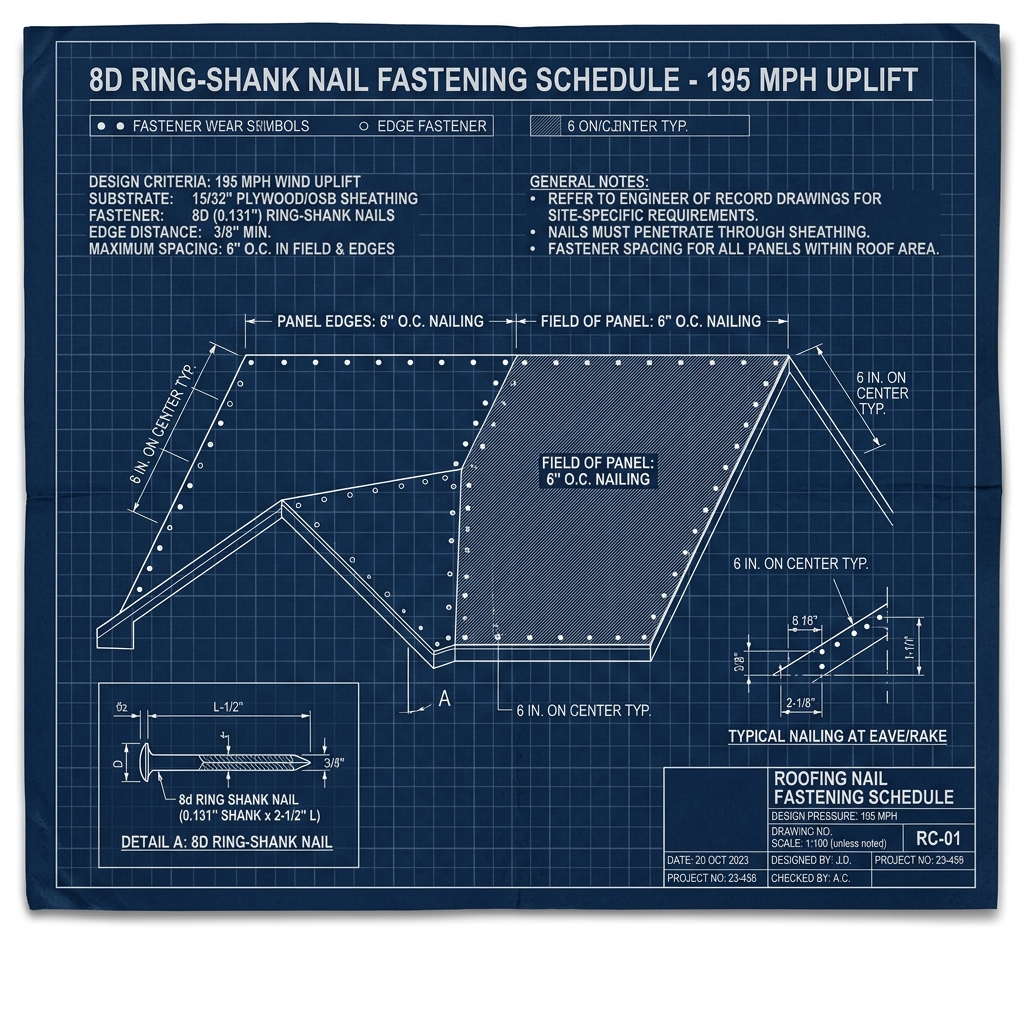
In standard construction, smooth-shank nails rely entirely on friction with the wood fibers. Under storm vibrations, smooth nails rapidly loosen and back out of the rafters. We exclusively specify 8d hot-dipped galvanized ring-shank nails (0.131-inch shank diameter, 2.5-inch length) featuring deep annular rings along the entire shank.
When driven into Douglas Fir or Southern Pine rafters, the wood fibers expand into the annular ring grooves, creating a mechanical wedge lock. This delivers a withdrawal pull-out resistance exceeding 210 lbs per individual nail—more than 250% stronger than smooth-shank fasteners. Nails are driven using calibrated pneumatic nailers spaced at 6 inches on center along all panel edges and intermediate rafter supports.
| Sheathing Panel | 5/8" (19/32") 5-Ply Exterior CDX Plywood |
| Span Rating | APA Rated 40/20 Structural Sheathing |
| Nail Type | 8d Annular Ring-Shank (0.131" x 2.5" HDG) |
| Withdrawal Resistance | > 210 LBS per Nail into Dense Timber |
| Fastener Spacing | 6" On Center Edges / 6" On Center Field Rafters |
| Uplift Safety Margin | Engineered for -120 PSF Negative Corner Uplift |
Secondary Water Resistance (SWR) Peel-and-Stick Bitumen Membranes
In the event that severe hurricane winds dislodge primary metal panels or concrete roof tiles, the secondary underlayment is all that prevents catastrophic water intrusion. Traditional organic asphalt felt papers (such as #30 felt) tear away rapidly once exposed to high wind speeds. The Florida Building Code and the Florida Office of Insurance Regulation (OIR) have established strict standards for Secondary Water Resistance (SWR) barriers.
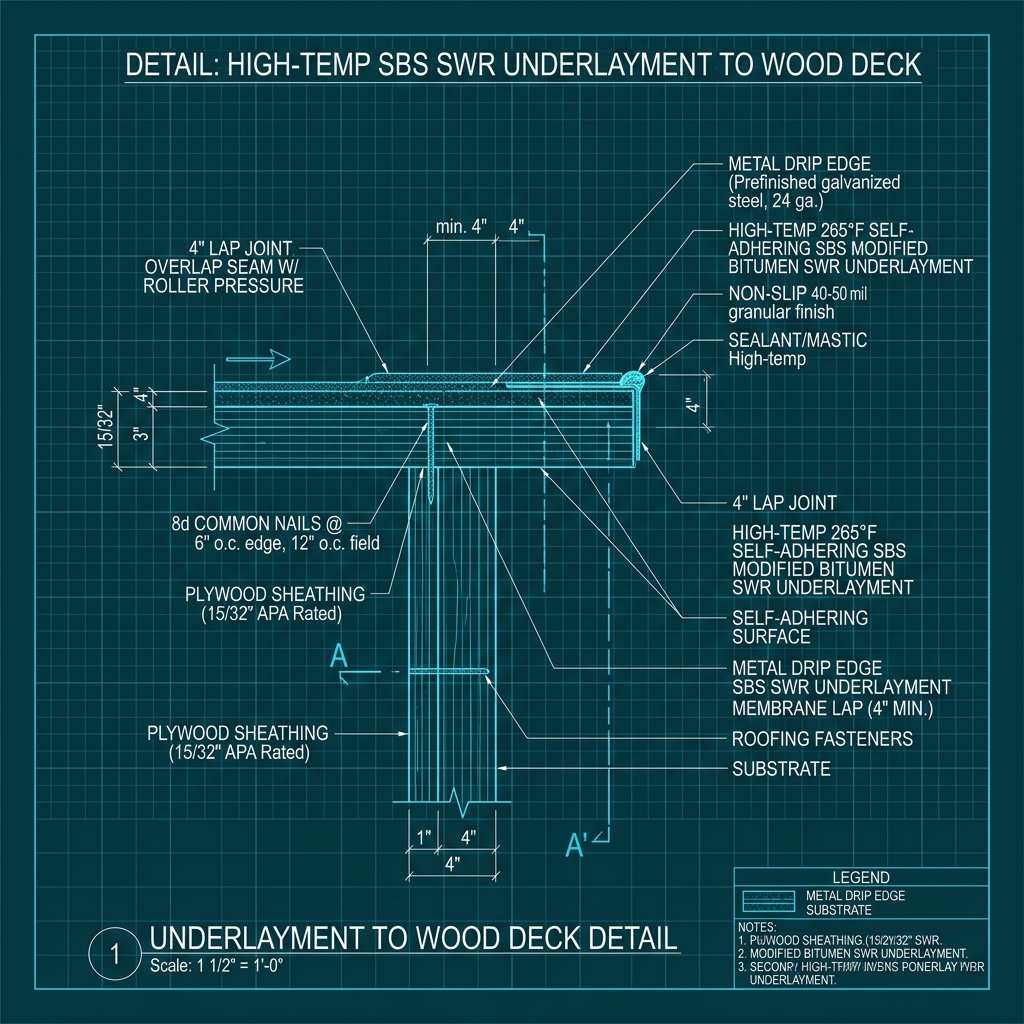
We install a 100% self-adhering modified bitumen peel-and-stick underlayment membrane (such as Polyglass Polystick XFR or Grace Ultra) applied directly to the bare, clean plywood roof deck. These elastomeric membranes feature a thick layer of Styrene-Butadiene-Styrene (SBS) modified asphalt compound laminated to a high-tensile fiberglass or polyester reinforcement matrix.
Thermal Stability & Auto-Sealing Nail Punctures
Under dark architectural metal roofs in the Florida climate, roof surface temperatures can reach 220°F to 240°F during peak summer afternoons. Standard underlayments melt and slide off the roof slope at these temperatures. Polystick XFR is chemically engineered to resist temperatures up to 265°F without degradation or asphalt bleed.
Crucially, when metal panel installation clips or roof fasteners are driven through the membrane, the thick SBS rubberized asphalt flows around the metal fastener shank, creating a hermetic, waterproof gasket that passes ASTM D1970 modified immersion testing. Homeowners who install this full-coverage SWR barrier qualify for the maximum insurance discount credits under the Florida Wind Mitigation Inspection Form (OIR-B1-1802 Section 3).
| Membrane Chemistry | SBS Modified Bitumen Self-Adhered Elastomer |
| Nominal Thickness | 65 Mils (1.65 mm Dual-Layer Composite) |
| High-Temperature Limit | 265°F Continuous Under Metal Panels |
| Elongation at Break | > 30% Elastic Recovery (ASTM D2523) |
| Nail Sealability | 100% Passes ASTM D1970 Hydrostatic Head |
| Insurance Credit | Florida Form OIR-B1-1802 Maximum SWR Tier |
24-Gauge Standing-Seam Metal with Concealed Expansion Clips
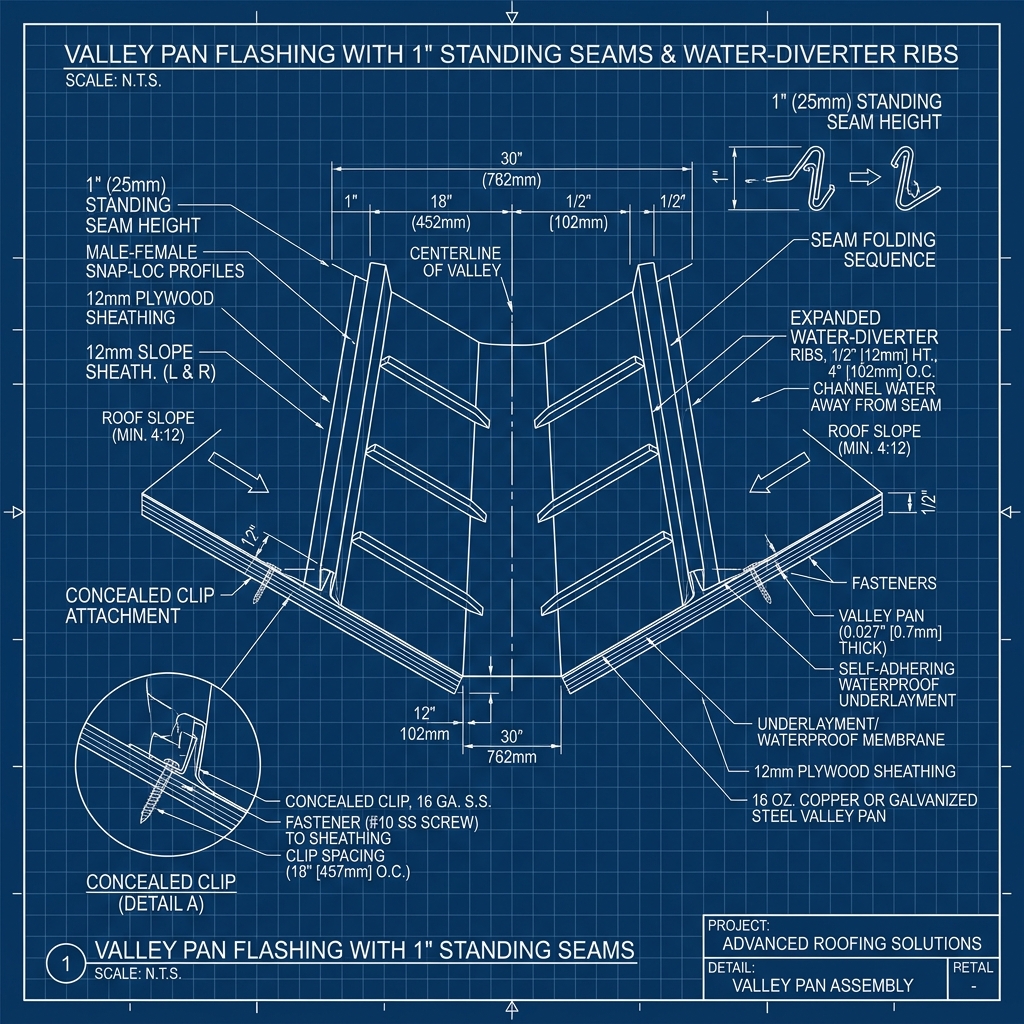
Architectural standing-seam metal roofing represents the pinnacle of modern luxury aesthetics, structural longevity, and hurricane resilience. Unlike commercial screw-down metal roofs (which feature thousands of exposed screws with rubber washers that dry rot in 5 years), our standing-seam systems utilize continuous, unbroken vertical pans with 100% concealed fasteners hidden inside the interlocking seams.
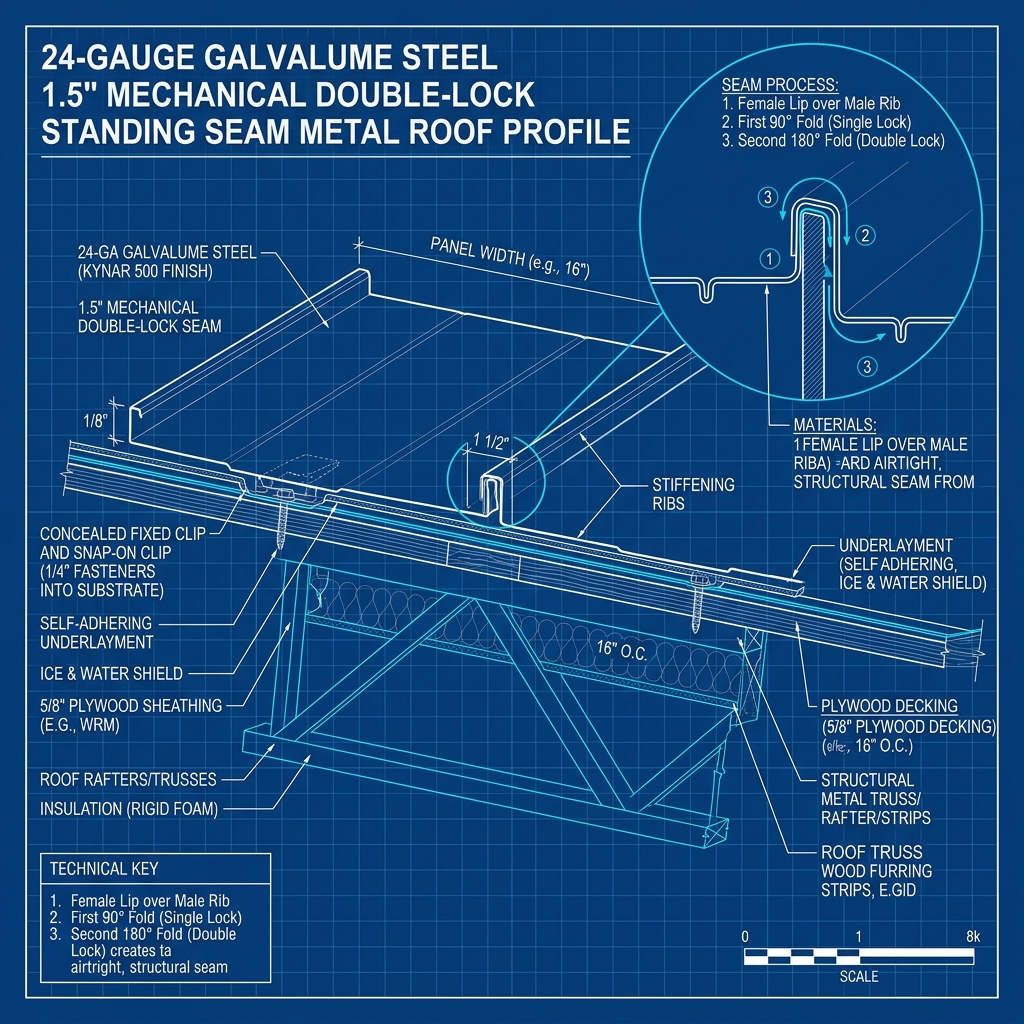
We fabricate our panels from heavy 24-gauge Galvalume steel (AZ-50 metallurgical alloy coating of 55% aluminum, 43.4% zinc, and 1.6% silicon) or 0.040-inch marine-grade 3003-H14 aluminum. The panels feature 1.5-inch or 2.0-inch tall vertical ribs that are mechanically seamed using a motorized double-lock electric seaming robot to form a completely watertight 360-degree Pittsburgh seam.
Concealed Sliding Clips & Thermal Expansion Engineering
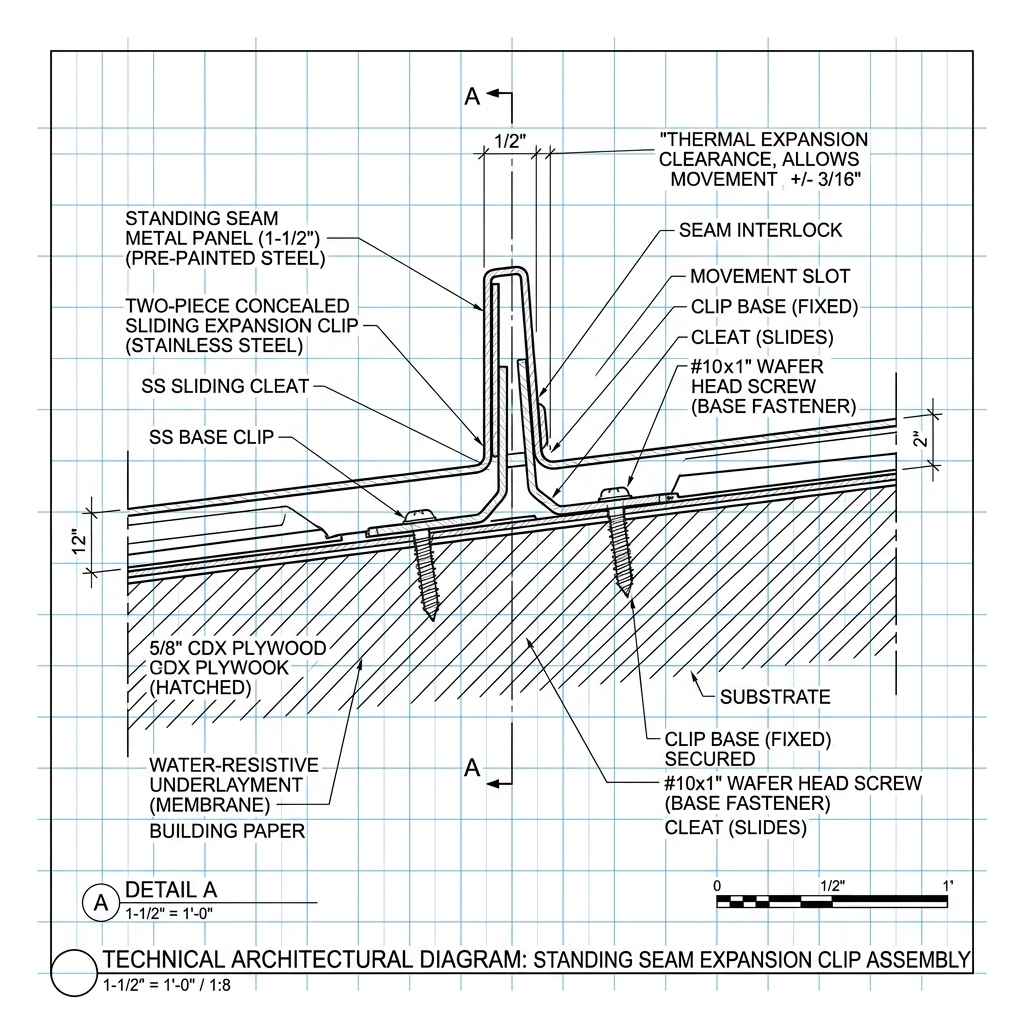
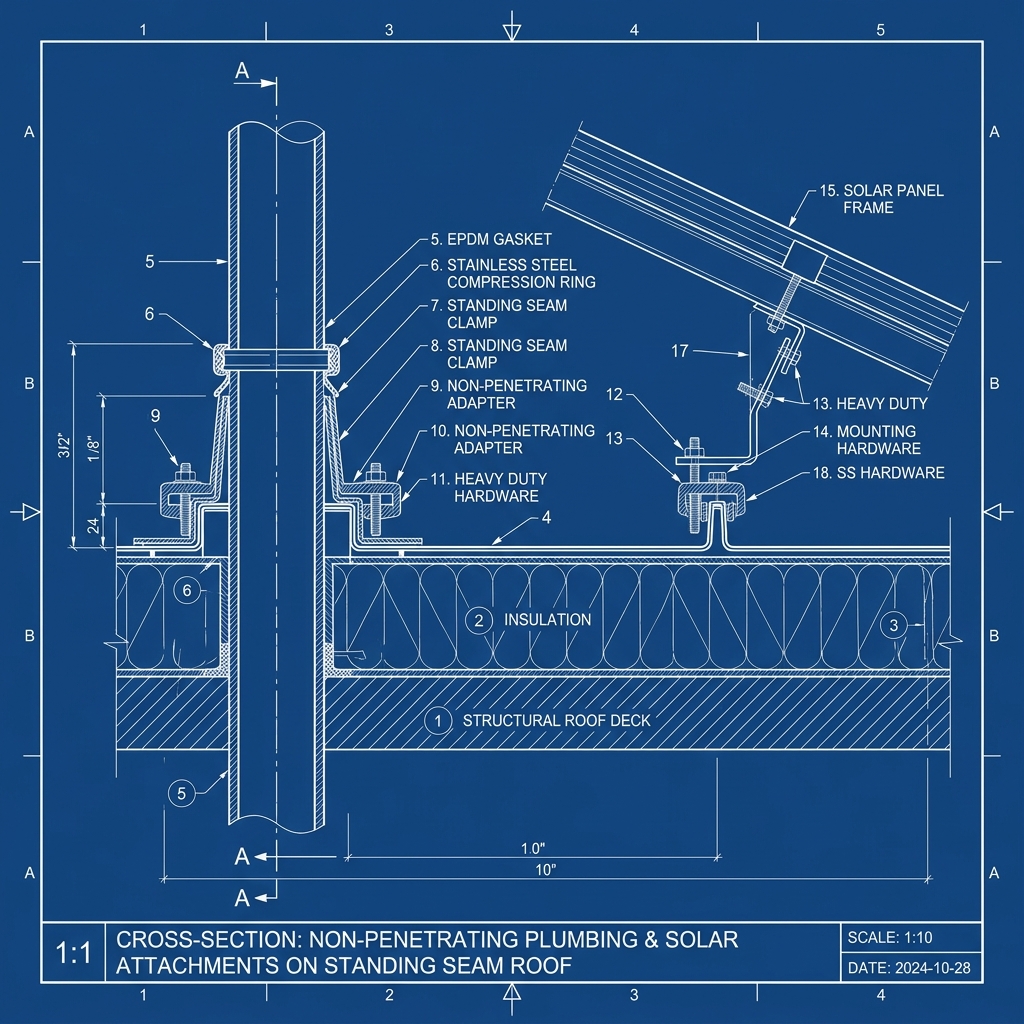
A 40-foot long dark charcoal metal roof panel will expand and contract up to 1/2 inch in length between cool nighttime temperatures and peak midday heat. If a metal panel is rigidly fixed with exposed screws, this thermal expansion causes the metal to buckle (oil-canning) and elongates the screw holes, leading to severe leaks. Our systems utilize heavy two-piece stainless steel sliding expansion clips anchored to the roof deck.
The top hook of the clip locks into the panel rib while the base allows the panel to glide freely along its longitudinal axis during thermal cycles, eliminating all oil-canning stress while delivering certified wind uplift resistance exceeding 185 MPH (UL 580 Class 90 and Miami-Dade NOA testing).
| Metal Substrate | 24-Gauge Galvalume (AZ-50) or 0.040" Marine Aluminum |
| Rib Geometry | 1.5" to 2.0" Mechanically Double-Locked Seam |
| Fastening Clip | Two-Piece Stainless Steel Sliding Expansion Clip |
| Finish Coating | Kynar 500 / Hylar 5000 (70% PVDF Resin) |
| Wind Uplift Rating | UL 580 Class 90 / TAS 125 (+185 MPH Rated) |
| Finish Warranty | 50-Year Non-Prorated Coastal Warranty |
High-Wind Concrete Tile & Polyfoam Adhesive Systems
For custom estates designed in contemporary Mediterranean, West Indies, or Coastal Modern styles, heavy architectural concrete and clay roof tiles offer classic elegance and exceptional acoustic dampening. However, in Florida's High-Velocity Hurricane Zone, traditional mortar-set or screw-down tile installation methods are notoriously prone to catastrophic failure during hurricane events.
To deliver uncompromising Category 5 hurricane protection, Six Senses Builders exclusively utilizes two-component expanding polyurethane foam adhesive systems (such as DuPont TileBond or ICP Polyset AH-160). Rather than mechanically screwing through the waterproofing membrane, pre-measured patties of expanding structural polyfoam are applied directly onto the SWR underlayment, chemically fusing each individual tile to the roof deck.
300% Greater Uplift Resistance & Zero Penetrations
Polyfoam adhesive expands into the underside cavities of the tile, creating a massive surface area bond that delivers more than 300% greater uplift resistance compared to traditional mechanical screws. Because no nails or screws penetrate the underlayment during tile installation, the integrity of the secondary water barrier remains 100% pristine and uncompromised.
Furthermore, our engineering teams install high-tensile stainless steel wind lock clips and interlocking hip and ridge channel assemblies rated for wind speeds up to 180 MPH in accordance with Miami-Dade Notice of Acceptance (NOA) protocols.
| Tile Material | High-Density Modern Flat Concrete Architectural Tile |
| Adhesive System | Two-Component Expanding Polyurethane Polyfoam (ICP Polyset) |
| Tensile Bond Strength | > 1,200 LBS per Individual Tile Assembly |
| Deck Penetrations | 0 Penetrations (Zero Screw Holes Through SWR) |
| Uplift Testing Protocol | TAS 101 / TAS 102 High-Velocity Testing |
| Impact Resistance | FM 4473 Class 4 Severe Hail & Debris Impact |
Kynar 500 PVDF Chemistry, Salt Spray & 50-Year Durability
Oceanfront environments represent the most hostile atmospheric conditions on Earth for architectural metals. The combination of intense ultraviolet solar radiation, marine salt aerosol (sodium chloride), and high ambient moisture causes standard polyester or silicone-modified polyester (SMP) paint finishes to chalk, fade, blister, and corrode within 3 to 5 years.
All Six Senses Builders metal roofing panels are factory-finished with authentic Kynar 500 / Hylar 5000 70% Polyvinylidene Fluoride (PVDF) liquid resin coatings. The carbon-fluorine bond in PVDF chemistry is one of the strongest chemical bonds known to science, fundamentally inert to UV breakdown, acid rain, and coastal salt spray.
3,000-Hour ASTM B117 Salt Fog Testing
Our Kynar 500 coatings undergo rigorous laboratory testing in accordance with ASTM B117 (Standard Practice for Operating Salt Spray / Fog Apparatus), surviving more than 3,000 continuous hours of 5% concentrated salt fog exposure with zero blistering, rust creeping, or adhesion loss. In addition, the coating features Cool Roof Rating Council (CRRC) certified infrared-reflective pigments that reflect up to 70% of solar heat radiation away from the roof, slashing household air conditioning energy costs by up to 25%.
Every standing-seam roof installed by Six Senses Builders is backed by our comprehensive 50-Year Non-Prorated Coastal Finish Warranty, ensuring that your home's roof retains its deep charcoal, matte black, or bronze aesthetic brilliance for a half-century.
| Resin Chemistry | 70% Kynar 500 / Hylar 5000 PVDF Liquid Resin |
| Salt Fog Resistance | > 3,000 Hours Continuous (ASTM B117 Protocol) |
| Solar Reflectance (SR) | Up to 0.70 Solar Reflectance (CRRC Certified) |
| Chalking & Fading | Less than 5 NBS Units Color Change at 20 Years |
| Coating Thickness | 1.0 Mil Topcoat over 0.2 Mil Epoxy Primer |
| Warranty Duration | 50-Year Non-Prorated Architectural Warranty |
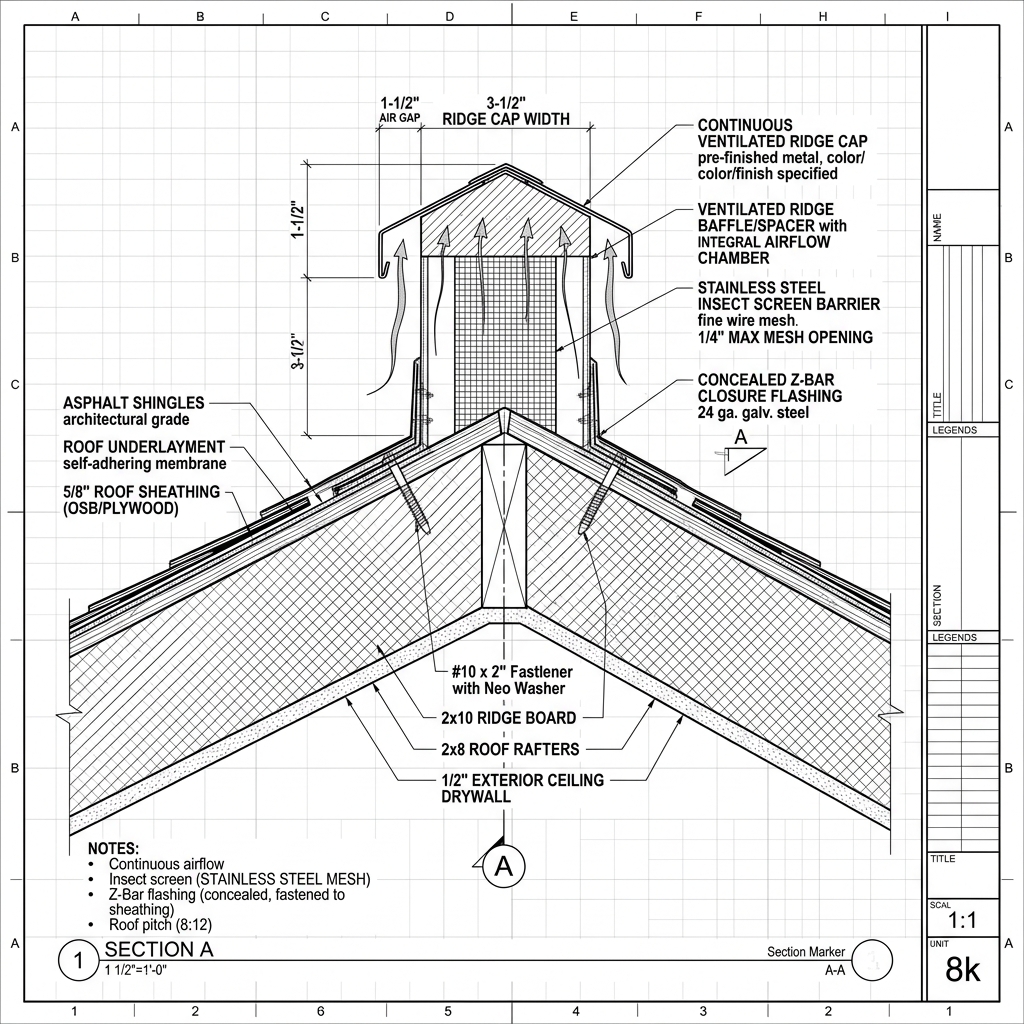
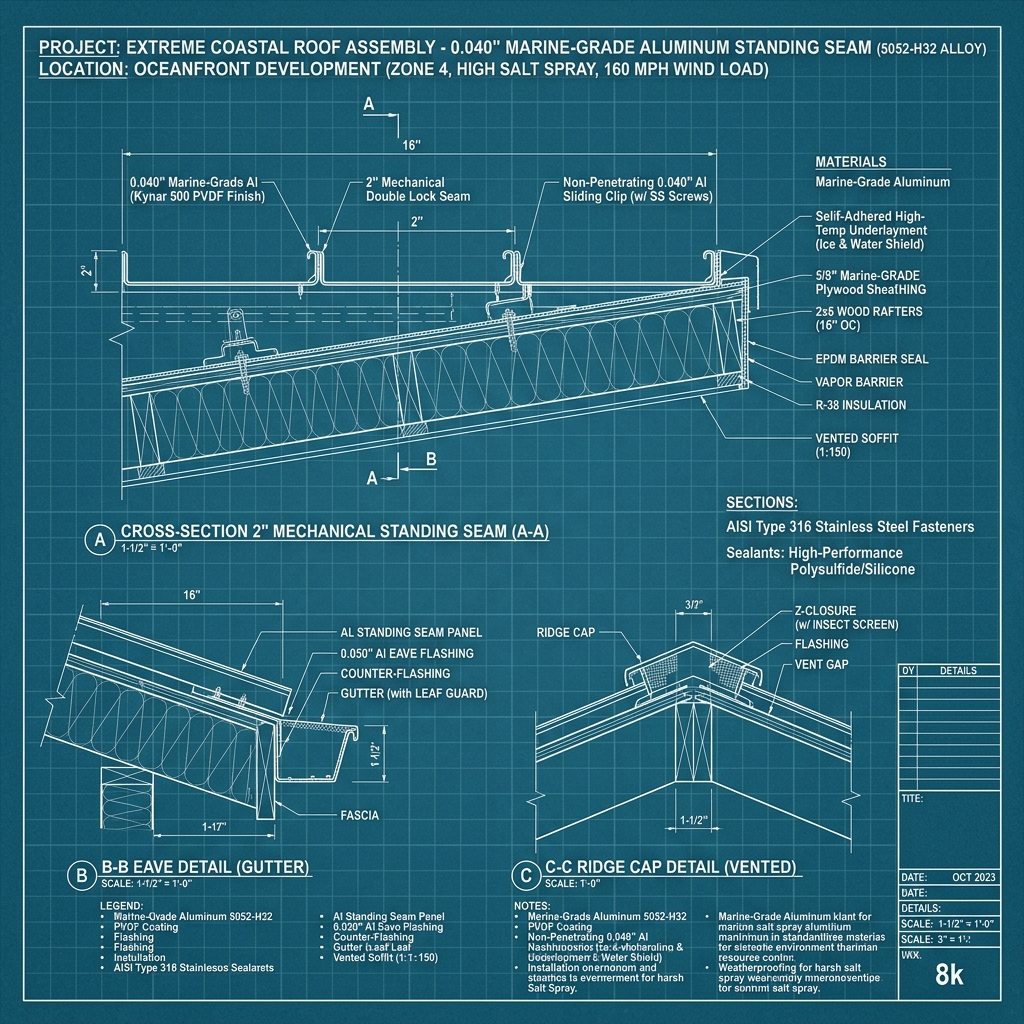
Standing Seam Metal Roofing Assembly & Wind Uplift Pinpoints
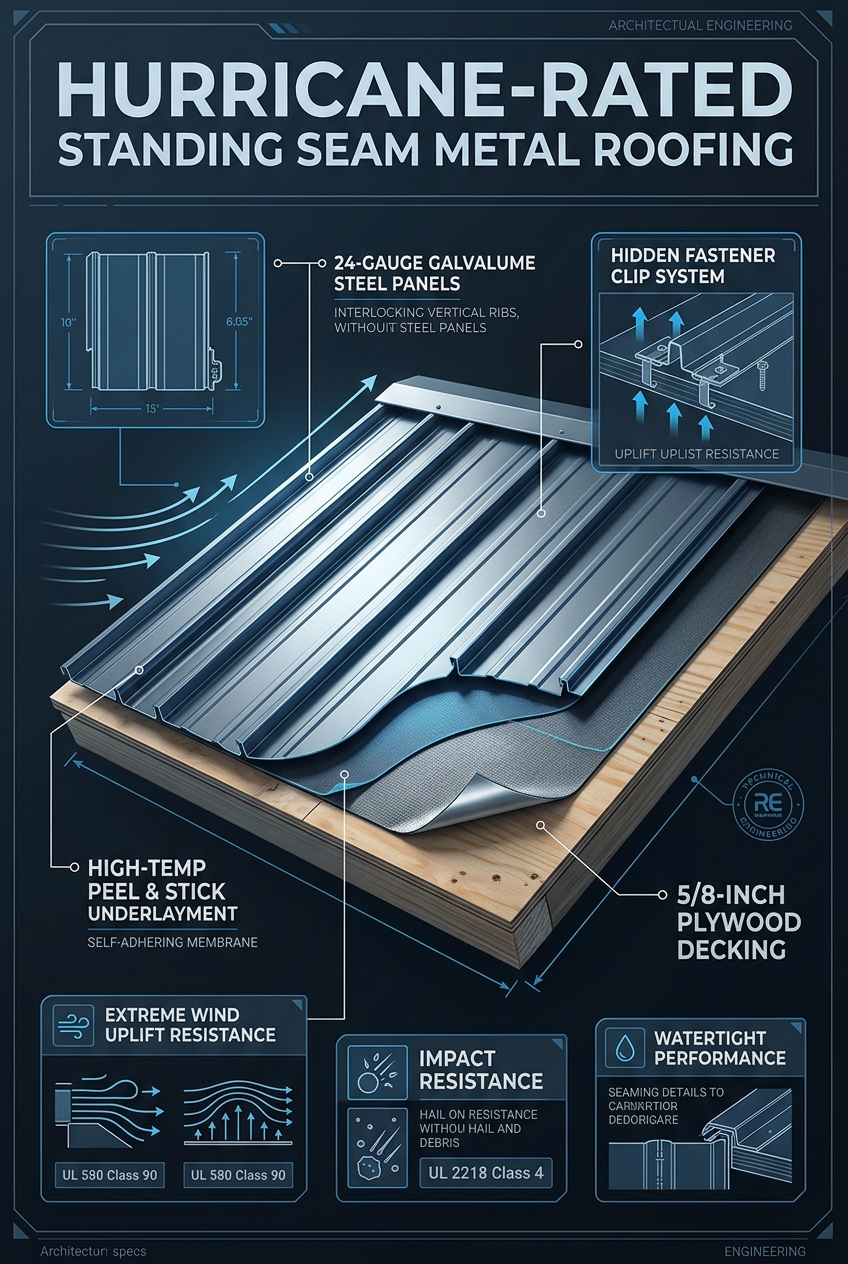
🔍 Click schematic to enlarge full-resolution blueprint
24-Gauge Galvalume Steel with Double-Lock Seams
1.5" mechanically seamed standing ribs engineered for 195+ MPH extreme hurricane wind uplift resistance.
Two-Piece Concealed Sliding Expansion Clips
Accommodates thermal expansion and contraction without tearing fasteners through panel ribs.
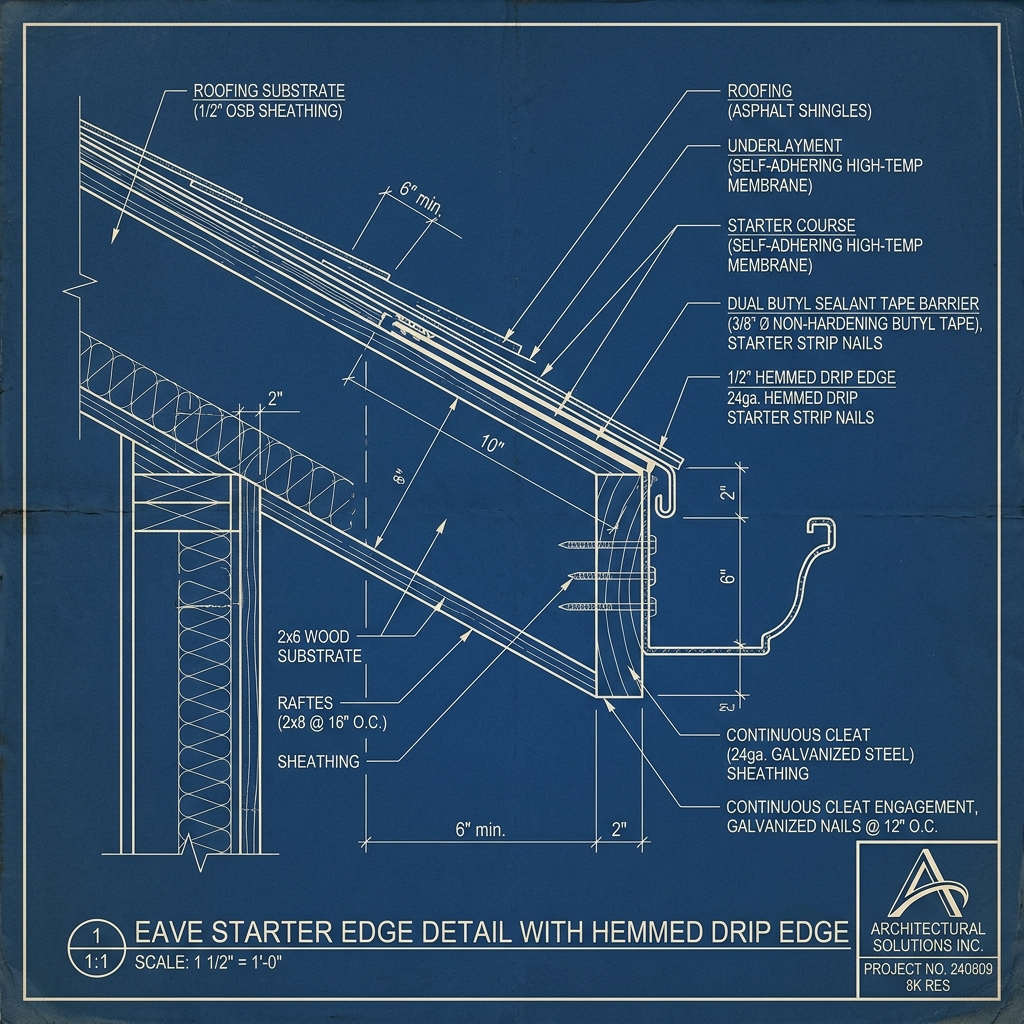
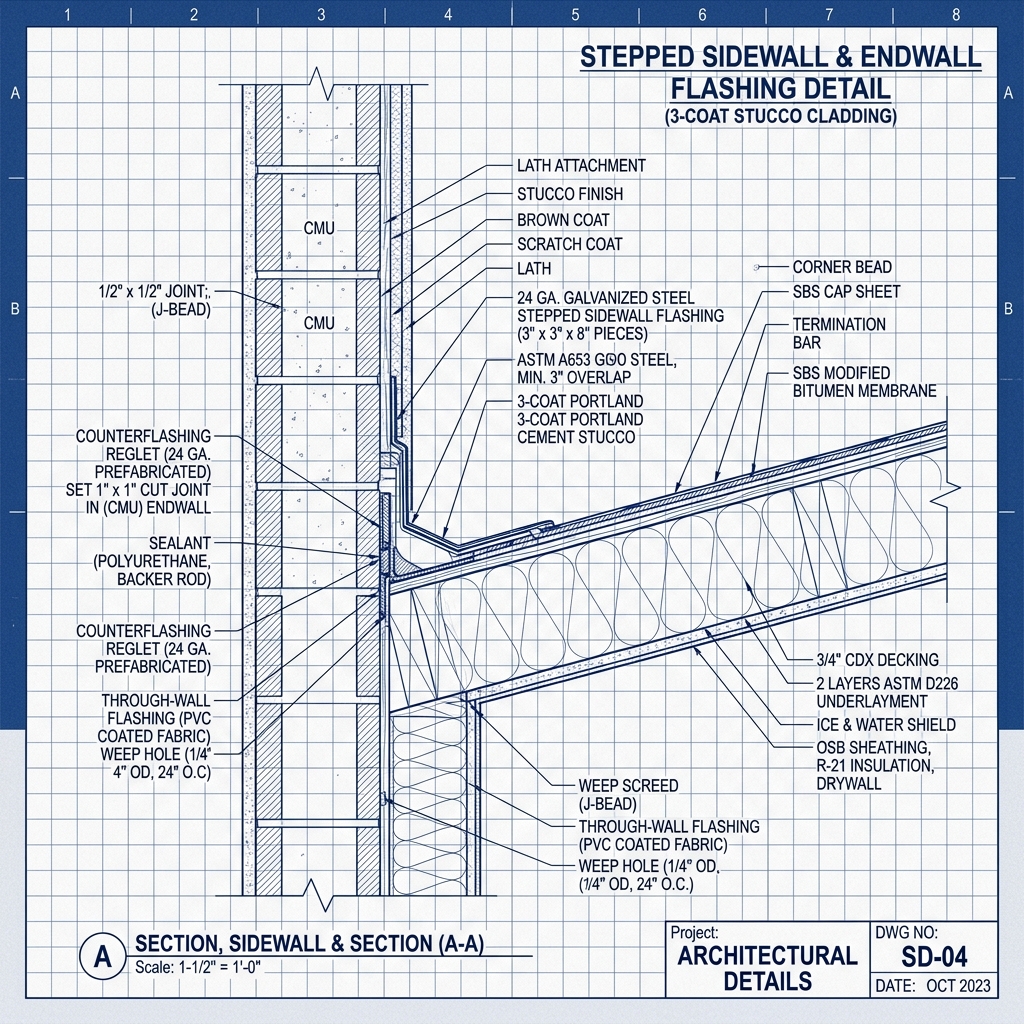
High-Temperature Self-Adhering SWR Membrane (265°F)
Direct-to-deck Secondary Water Resistance (FBC § 1507.1.1) self-sealing around fasteners.
5/8" CDX 5-Ply Plywood Sheathing with Ring-Shank Nails
8d ring-shank fasteners spaced at 6" O.C. for maximum decking withdrawal resistance.
Kynar 500 / Hylar 5000 PVDF Architectural Coating
Salt-fog and UV-resistant exterior finish preventing chalking, fading, and coastal oxidation.