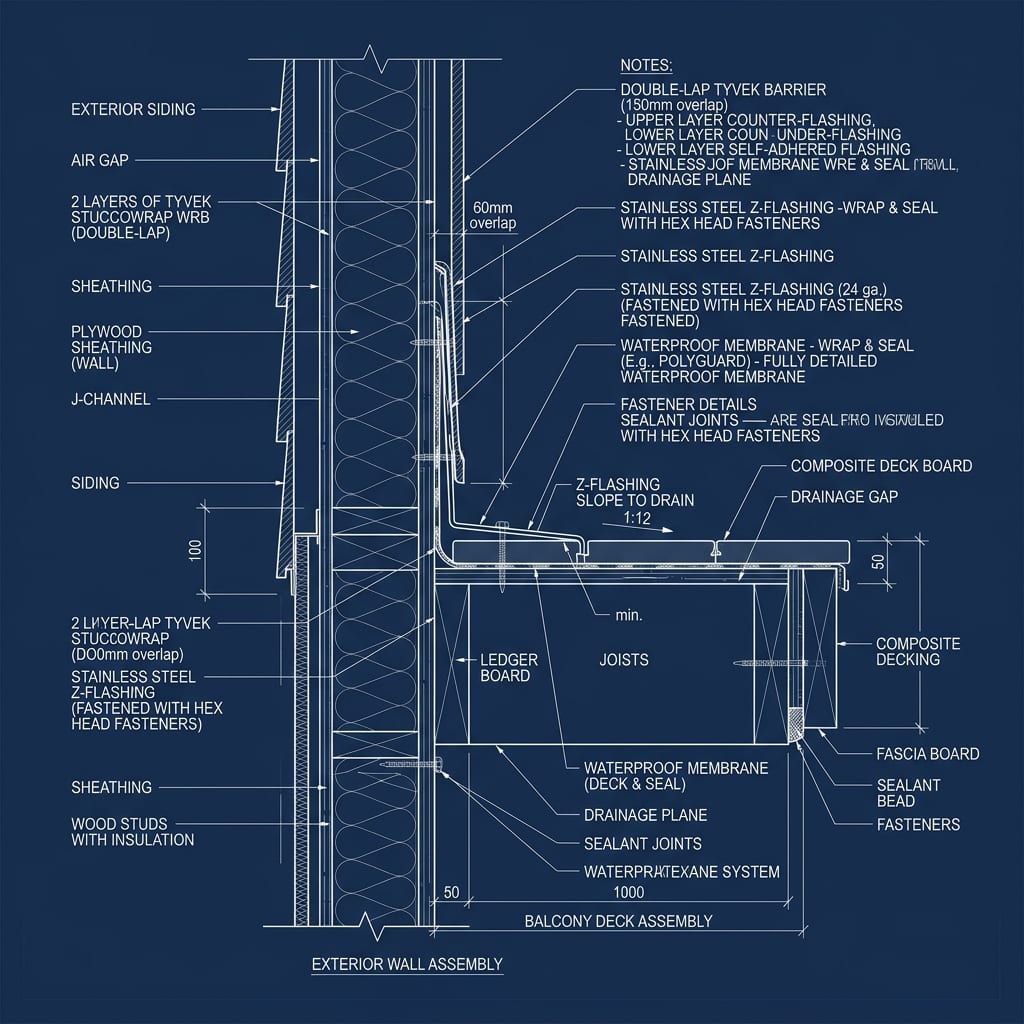
🛡️ 20s–Weather Barrier • Monolithic Envelope Defense
Coastal Envelope Weatherproofing & Flashing Engineering Guide
Deep 3,000+ word technical guide to coastal envelope weatherization: DuPont Tyvek CommercialWrap, 100% synthetic butyl FlexWrap sill pans, STPE liquid membranes, and ASTM E1105 water testing.
DuPont Tyvek CommercialWrap, Micro-Permeability & Vapor Physics
In coastal Florida's subtropical climate, the exterior building envelope is subjected to severe environmental stress. Ambient temperatures regularly exceed 95°F with relative humidity levels surpassing 90%, while summer tropical depressions drive torrential rain against exterior walls at sustained velocities over 60 MPH. Under these extreme conditions, standard residential housewraps and perforated polyolefin papers fail catastrophically, trapping moisture inside wall assemblies or tearing loose under wind pressure.
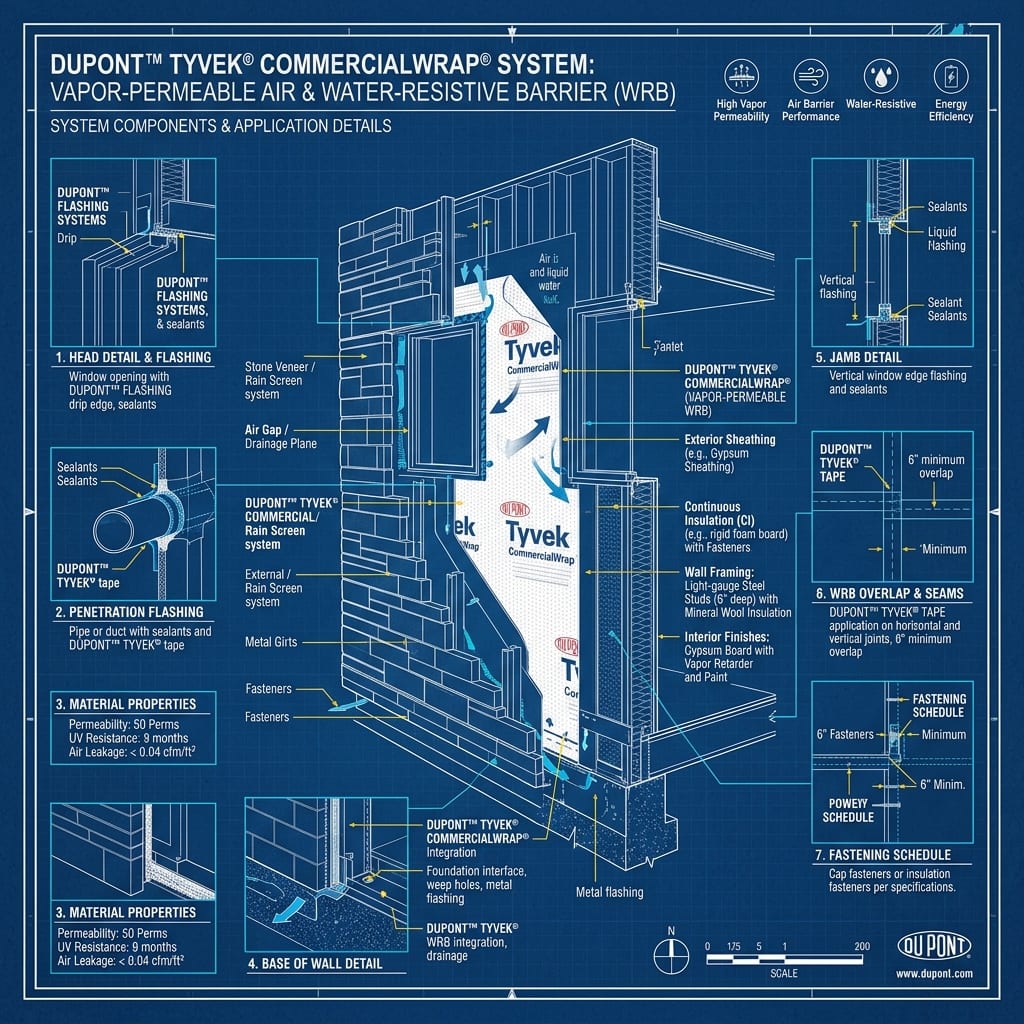
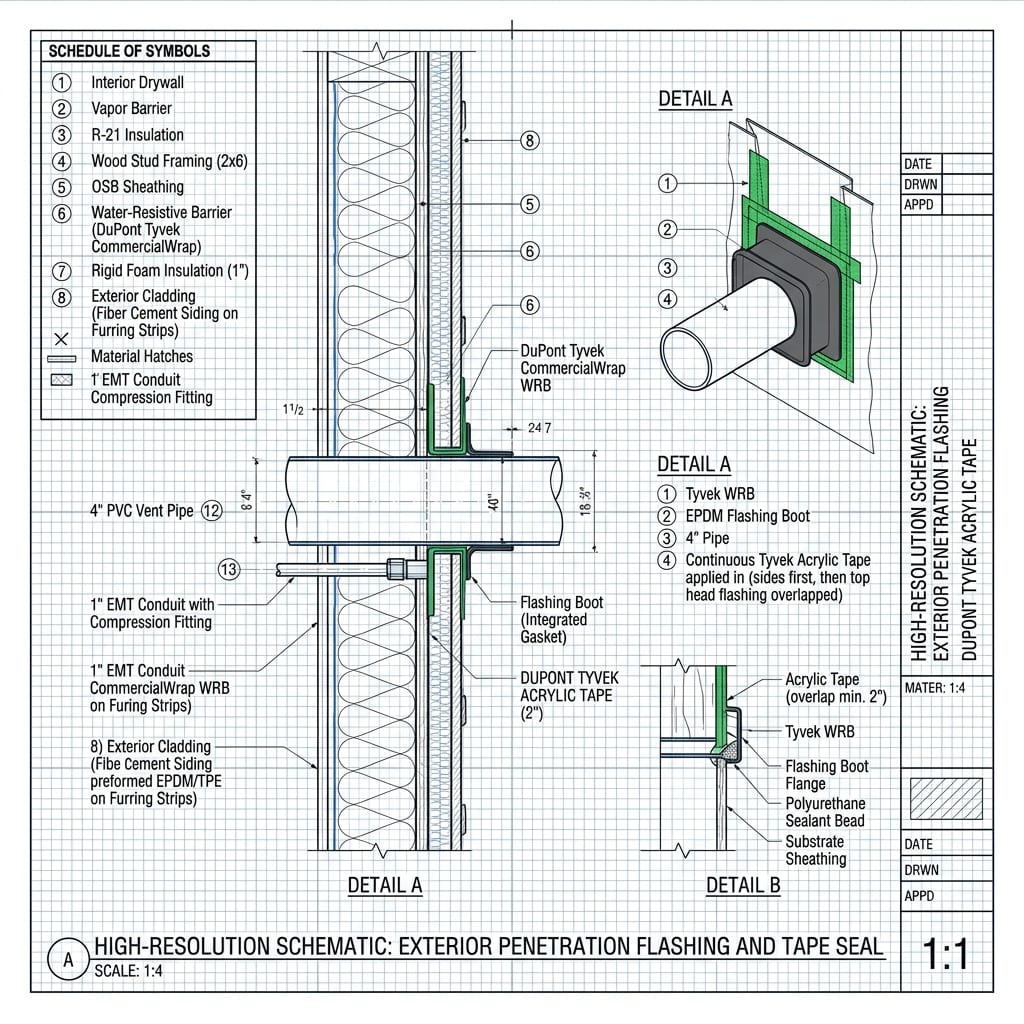
Our building envelope engineering specifies DuPont Tyvek CommercialWrap—the industry's benchmark non-woven continuous filament spunbonded olefin barrier. Unlike perforated housewraps that rely on microscopic mechanical holes that allow water under pressure to leak through, Tyvek CommercialWrap is formed through a flash-spinning process that creates millions of microscopic interlocking fibers. This unique structure blocks bulk liquid water from penetrating inward while allowing moisture vapor from within the wall cavity to diffuse outward at an optimal rate of 28 U.S. Perms (ASTM E96 Method A).
Hydrostatic Head Resistance & Wind-Driven Rain
During a Category 5 hurricane, the positive air pressure on the exterior face of a building forces rainwater through every microscopic seam and fastener puncture. Tyvek CommercialWrap delivers hydrostatic head water resistance exceeding 250 cm of water column pressure (AATCC 127), ensuring zero liquid water penetration even when submerged under direct positive storm pressure. Furthermore, its continuous air barrier property (< 0.001 cfm/ft² at 75 Pa, ASTM E2178) prevents humid outdoor air from infiltrating into the wall cavity, dramatically reducing air conditioning energy loads and eliminating interstitial condensation.
| Material Chemistry | 100% Spunbonded Polyolefin Non-Woven Fibers |
| Water Penetration Resistance | Hydrostatic Head > 250 cm (AATCC 127) |
| Vapor Permeance | 28 U.S. Perms (ASTM E96 Method A) |
| Air Infiltration Rate | < 0.001 cfm/ft² at 75 Pa (ASTM E2178) |
| UV Sun Exposure Rating | 270 Days Continuous Direct Sunlight |
| Tear Strength (MD/CD) | 33 / 41 LBS (ASTM D1117) |
Butyl Self-Adhered Flexible Sill Pan Flashing & Corner Physics
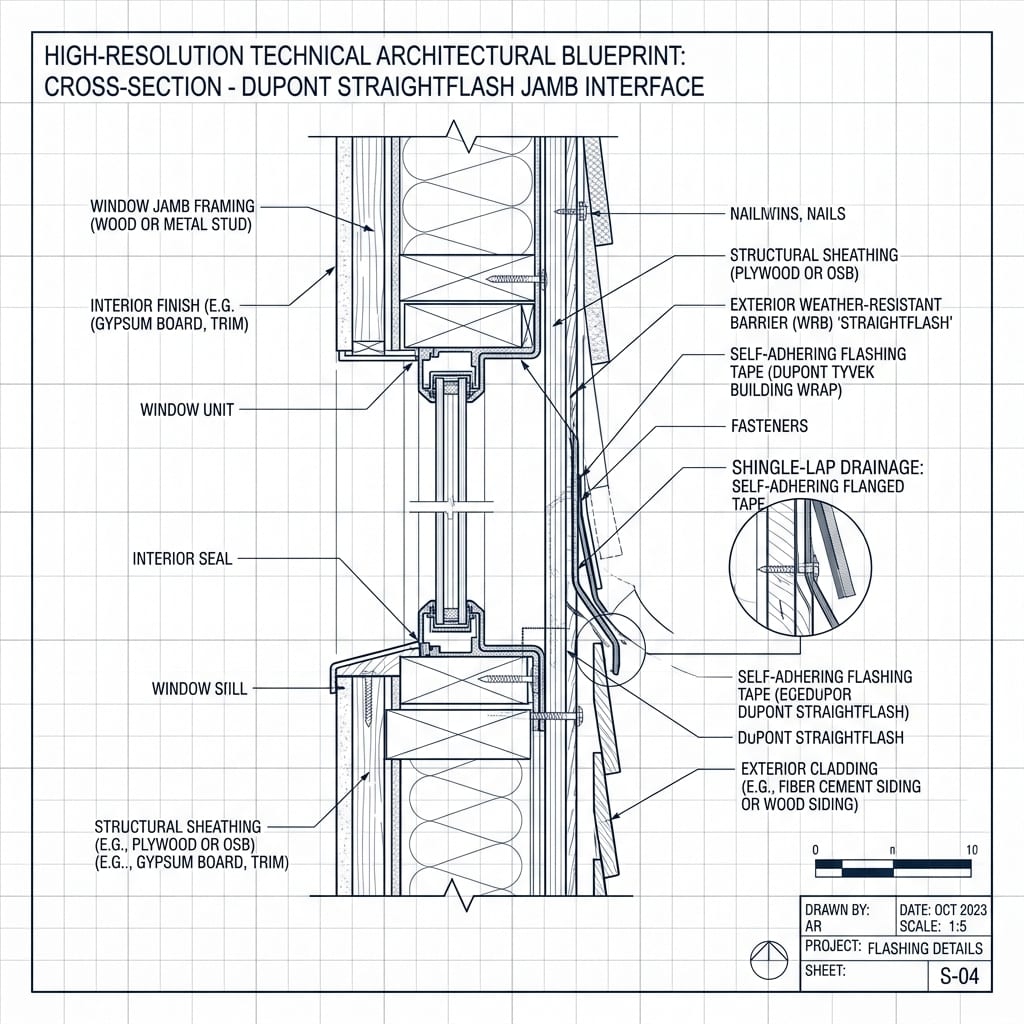
Forensic engineering studies indicate that more than 85% of all building envelope water intrusion occurs around the perimeter of window and door rough openings, with the lower sill corners representing the most critical failure point. In traditional construction, installers overlap multiple flat pieces of flashing tape at the sill corners, creating vulnerable step joints and seams where water pooling in the sill pan can seep behind the housewrap into the timber framing.
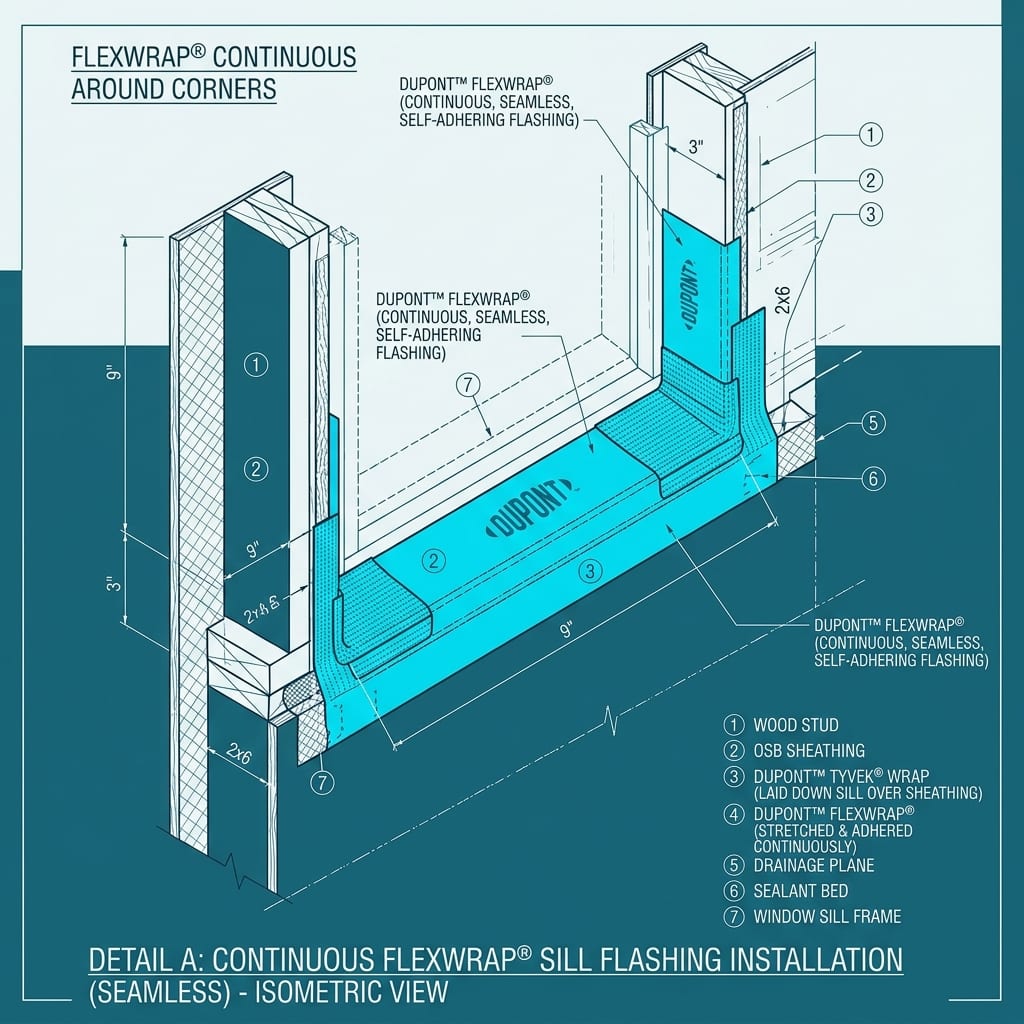
We eliminate all corner seams through the utilization of DuPont FlexWrap NF—a premium, highly conformable self-adhered flashing membrane. FlexWrap features a patented micro-creped polyolefin backing laminated to an advanced 100% synthetic butyl rubber adhesive. This allows the installer to extend a single, continuous, monolithic piece of membrane across the entire horizontal window sill and stretch it seamlessly up the vertical side jambs by 6 inches without cutting, slitting, or patching the corners.
160% Elasticity & Fastener Self-Sealing Chemistry
The synthetic butyl adhesive used in FlexWrap NF maintains superior adhesion across a wide operating temperature range from -40°F to 220°F, resisting the extreme thermal cycling common in dark-framed architectural windows under the Florida sun. Crucially, the viscoelastic properties of the butyl compound allow it to self-seal around all stainless steel frame anchor screws and installation shims (passing ASTM D1970 nail sealability testing). This prevents water that collects on the sill pan from bypassing the fastener penetrations into the structural jack studs below.
| Adhesive Composition | 100% 4th-Generation Synthetic Butyl Rubber |
| Elongation at Break | 160% Elastic Stretch without Tearing |
| Operating Temperature | -40°F to 220°F Continuous Thermal Rating |
| Nail Sealability | Passes ASTM D1970 Modified Water Immersion |
| Corner Geometry | Monolithic Seamless Extension (Zero Slits) |
| Adhesion to Substrate | > 5.0 LBS/Inch to Plywood and Concrete |
Liquid-Applied Flashing Membranes & Window Buck Interfacing
In modern coastal residential architecture involving cast-in-place concrete tie beams, poured concrete masonry units (CMU), and wood-framed bucks, transitional interfaces are exposed to complex multi-axis shear stresses. Where flexible sheet membranes encounter irregular masonry surfaces or structural steel embed plates, we reinforce the weatherization envelope using advanced liquid-applied hybrid elastomeric flashing membranes (such as DuPont Liquid Flashing or Prosoco R-Guard FastFlash).
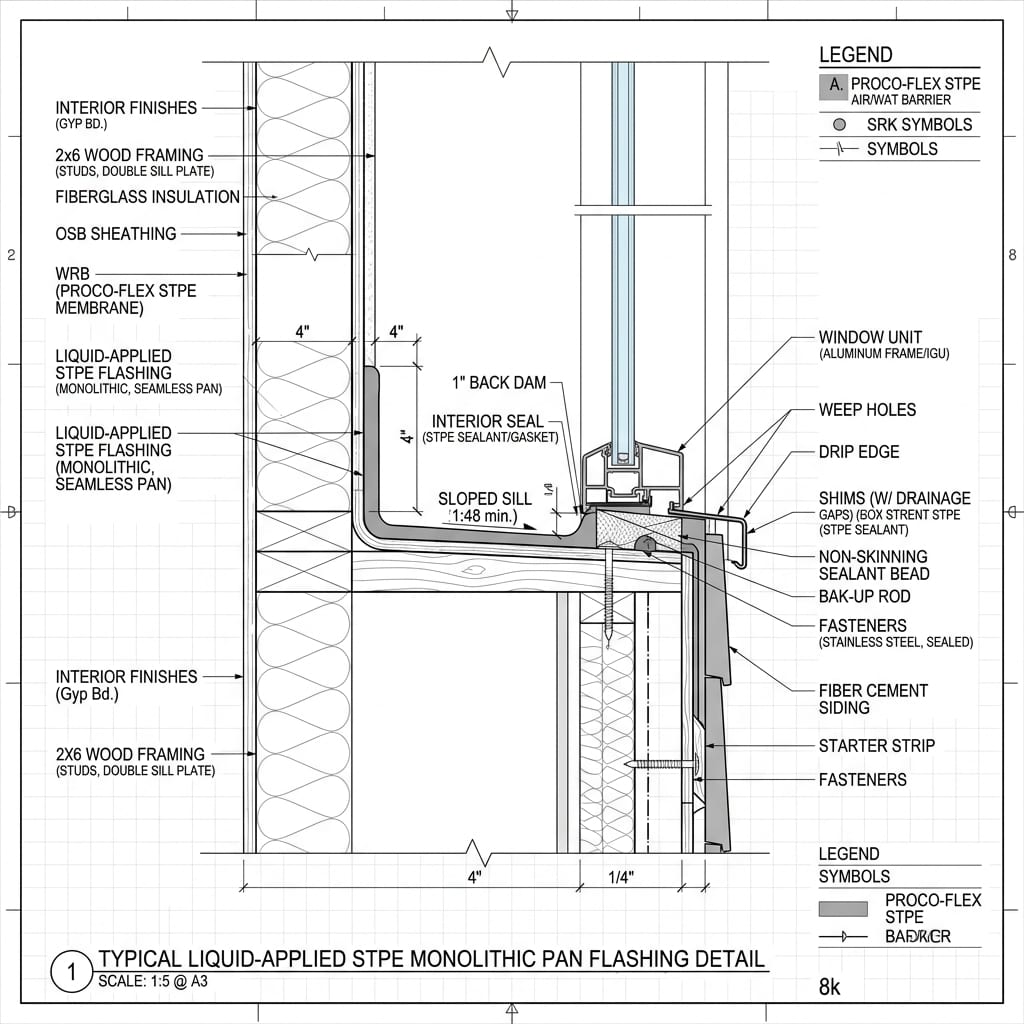
Formulated from single-component silyl-terminated polyether (STPE) polymers, these liquid membranes gun directly into rough opening gaps and are troweled smooth to form a seamless, rubberized, elastomeric gasket spanning from the interior window stop out to the exterior face of the weather barrier. STPE chemistry cures via ambient atmospheric moisture and can even be applied onto damp substrates, eliminating construction weather delays.
Chemical Compatibility & Plasticizer Migration
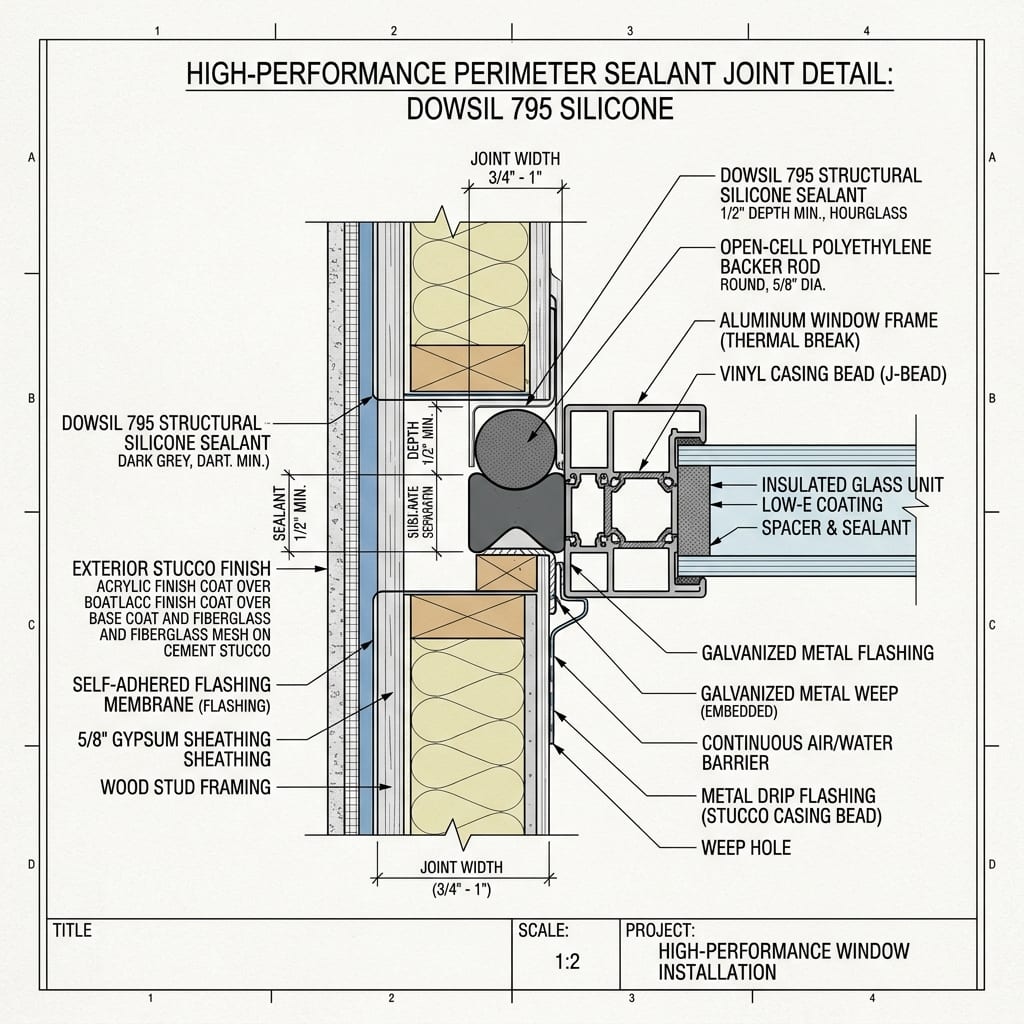
A frequent and catastrophic failure in window installation is the chemical incompatibility between asphaltic flashing tapes and structural silicone sealants. Standard asphalt and bitumen flashing compounds contain aromatic oils and plasticizers that react with architectural silicone, causing the silicone to liquefy, discolor, and lose all adhesive bonding. Our strict specifications prohibit asphalt-based tapes, requiring 100% butyl and STPE polymers that are chemically inert and fully compatible with Dow Corning 983 and 795 structural silicones.
| Polymer Technology | Silyl-Terminated Polyether (STPE Hybrid) |
| Elongation Capacity | > 300% (ASTM D412) |
| Tensile Strength | > 150 PSI (ASTM D412) |
| Shore A Hardness | 30 to 40 Elastomeric Rubber |
| Silicone Compatibility | 100% Compatible (Zero Plasticizer Bleed) |
| Application Conditions | Wet/Damp Substrate Tolerant (32°F to 110°F) |
Rainscreen Drainage Cavities, Furring Strips & Ventilation Physics
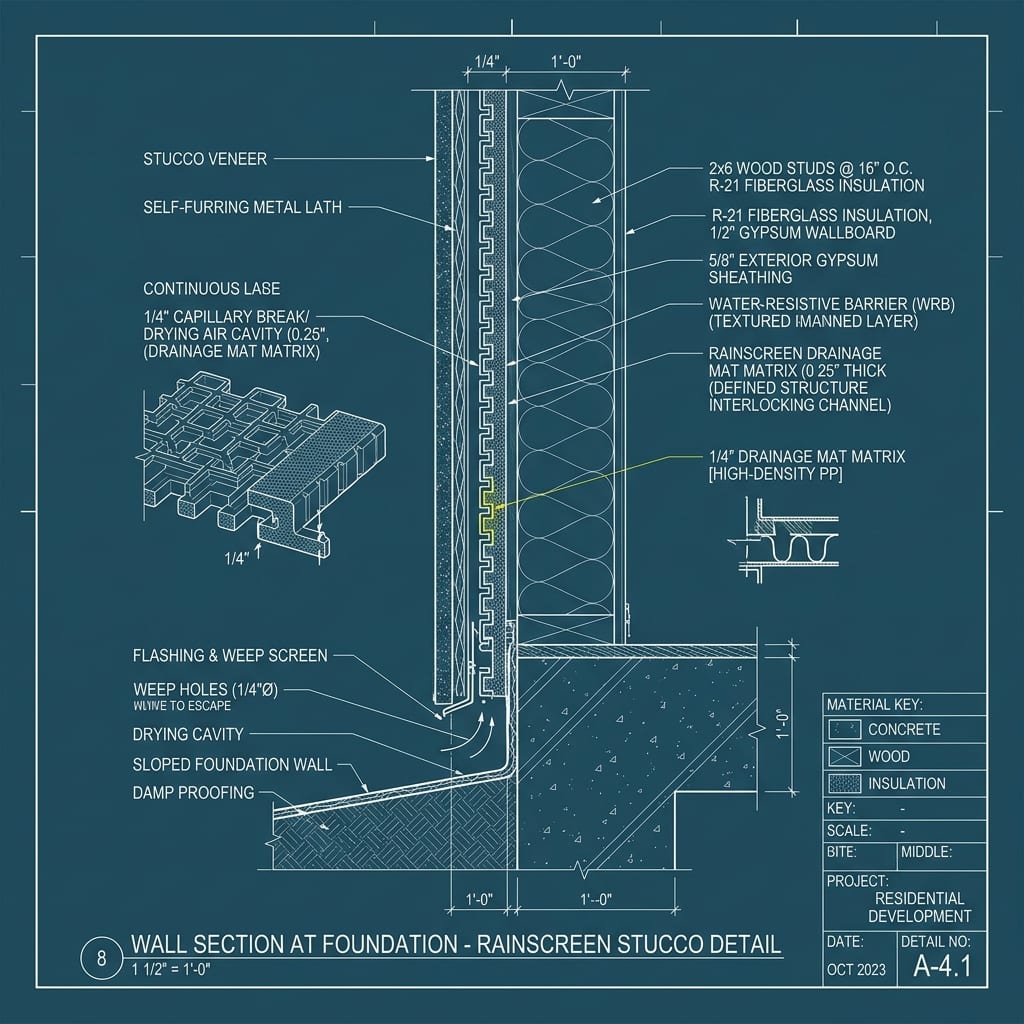
True long-term envelope durability requires a defense-in-depth approach known as the rainscreen principle. Rather than attempting to create a single 'perfect' exterior cladding barrier that can never leak, an engineered rainscreen system acknowledges that wind-driven rain will eventually penetrate the exterior facade (whether stucco, architectural porcelain slabs, or wood siding) and provides an unhindered drainage plane and ventilation cavity to immediately evacuate that moisture.
We incorporate 3/8-inch (10mm) continuous polypropylene filament drainage mats (such as DuPont RainScreen or Keene Driwall) or pressure-treated marine composite furring strips over the primary Tyvek barrier. This creates an open, unobstructed vertical air cavity between the exterior cladding and the weather-resistive barrier.
Gravity Drainage & Capillary Break Engineering
The rainscreen air cavity serves three vital physical functions:
- Capillary Break: It physically interrupts surface tension, preventing liquid water clinging to the back of the cladding from being drawn by capillary action through nail holes into the wall assembly.
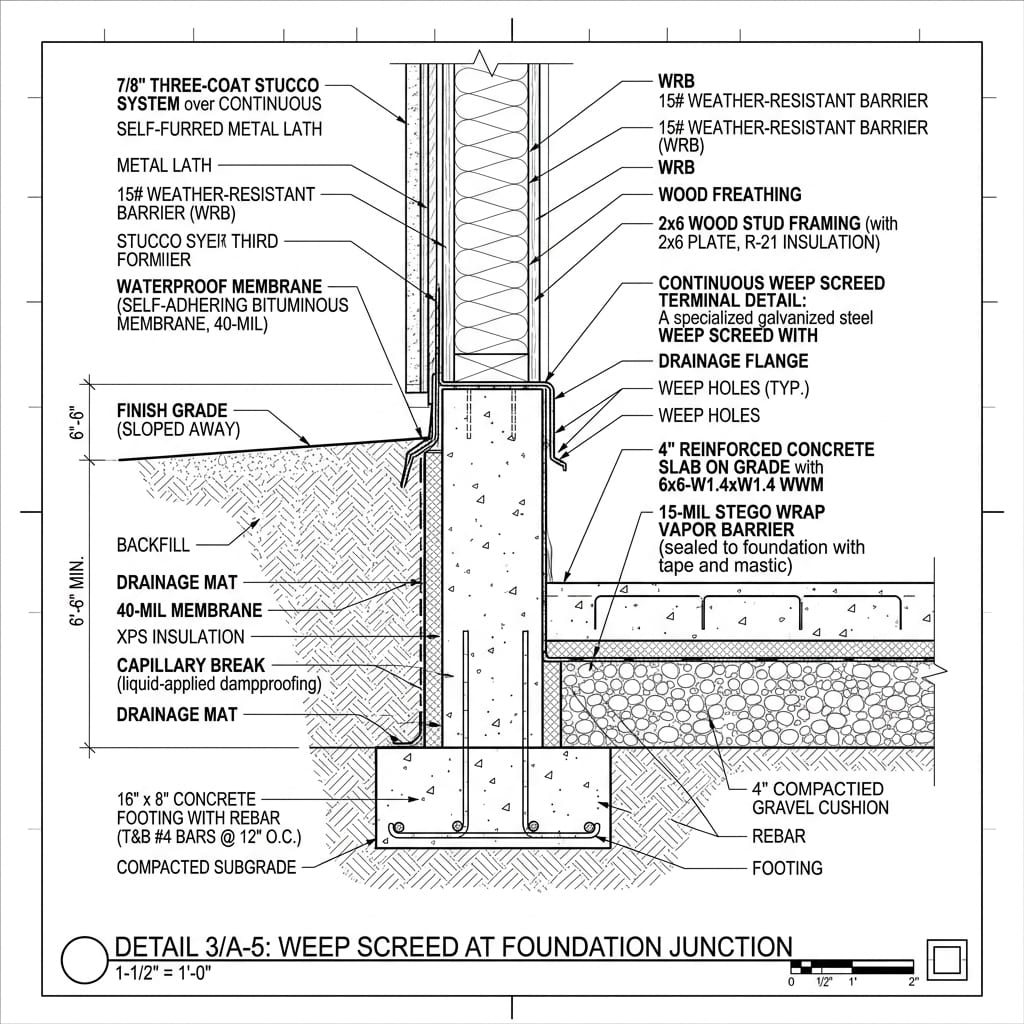
- Rapid Gravity Drainage: Any water that penetrates the cladding drops instantly by gravity to the bottom of the wall cavity, where it is directed harmlessly out through stainless steel weep screeds and bug screens.
- Continuous Convective Drying: Solar radiation heating the exterior cladding creates a thermal chimney effect inside the cavity, driving upward convective air movement that continuously dries out both the cladding and the weather barrier.
| Cavity Depth | 3/8" (10mm) Continuous Drainage Gap |
| Drainage Efficiency | > 95% Water Evacuation Rate (ASTM E2273) |
| Filament Matrix | 3-Dimensional Polypropylene Entangled Mesh |
| Ventilation Screening | Stainless Steel Micro-Mesh Weep Screed |
| Fire Rating | Class A Flame Spread Index (ASTM E84) |
| Thermal Chimney Boost | Up to 15 CFM Convective Air Flow |
ASTM E331 Water Infiltration Testing & QA Quality Protocols
To ensure that the completed building envelope performs flawlessly under the most extreme hurricane conditions, Six Senses Builders enforces strict Quality Assurance (QA) testing protocols on all residential projects. We do not rely on visual inspection alone; every weatherization installation is validated through calibrated on-site field water penetration testing.
In accordance with ASTM E1105 (Field Determination of Water Penetration using Calibrated Spray Rack and Vacuum Chamber) and AAMA 501.2 (Quality Assurance Water Hose Testing), our field engineers subject installed window bucks, sill pans, and wall penetrations to continuous water spray at a rate of 5.0 gallons per square foot per hour while applying a negative differential air pressure of 15.0 PSF (equivalent to a 77 MPH wind-driven storm).
Field Inspection Documentation & Lifetime Envelope Warranty
Every rough opening undergoes a comprehensive 12-point quality verification checklist before the primary window units are set:
- Verification of substrate moisture content (< 15% using Delmhorst moisture meters).
- Full audit of DuPont Tyvek seam tape adhesion using calibrated pressure rollers.
- Laser level inspection of 1/4-inch per foot positive outward sill slope.
- Electronic wet-film thickness audit of all liquid-applied flashing transitions.
This rigorous field testing protocol enables Six Senses Builders to back every weatherization installation with our exclusive 10-Year Water & Air Infiltration Warranty, providing complete peace of mind for the lifetime of your luxury coastal home.
| Field Water Test | ASTM E1105 / AAMA 501.2 Calibrated Spray Test |
| Spray Delivery Rate | 5.0 Gallons / SQ FT / Hour |
| Pressure Differential | 15.0 PSF Static Air Pressure (77 MPH Equivalent) |
| Sill Slope Geometry | Minimum 1/4" Positive Outward Drainage Fall |
| Moisture Meter Threshold | < 15% Wood Moisture Content Verified |
| Warranty Coverage | 10-Year Comprehensive Envelope Infiltration Warranty |
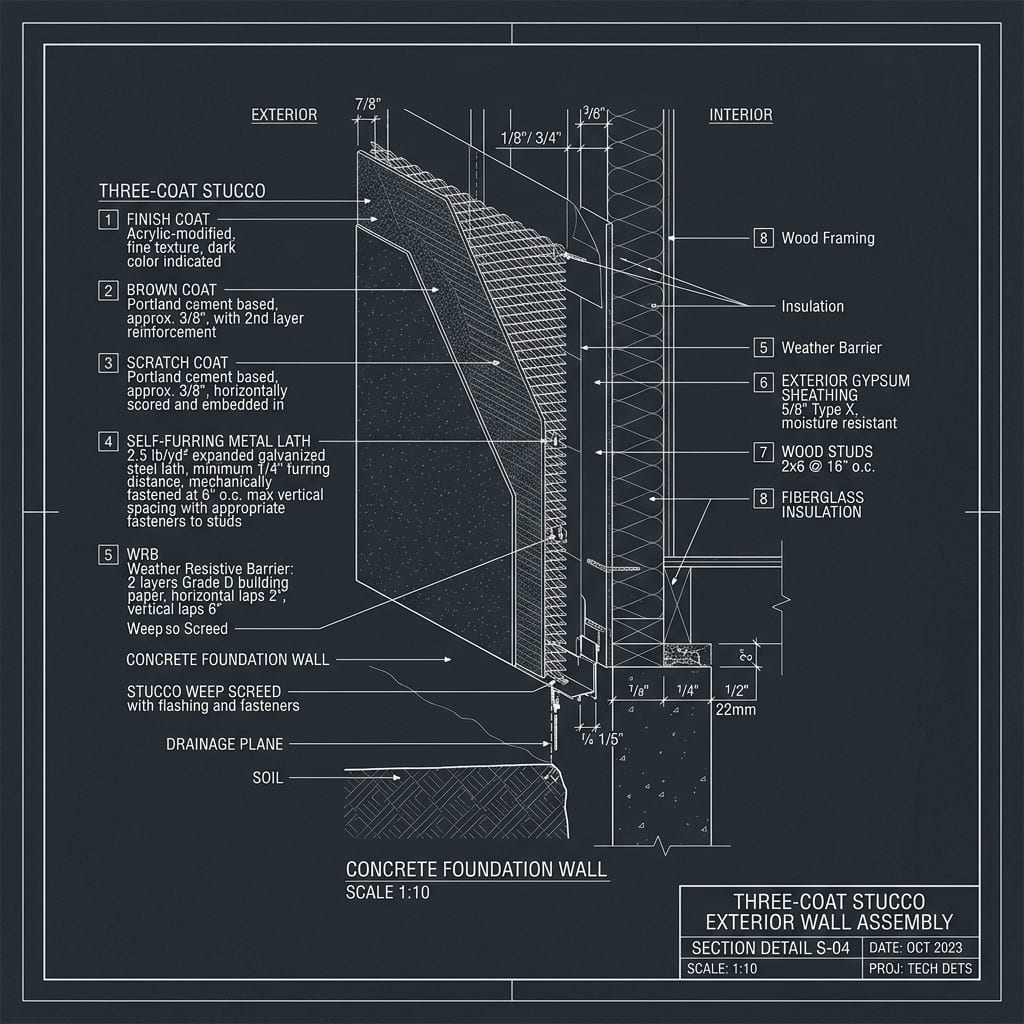
DuPont Tyvek Weather Barrier & Envelope Pinpoints
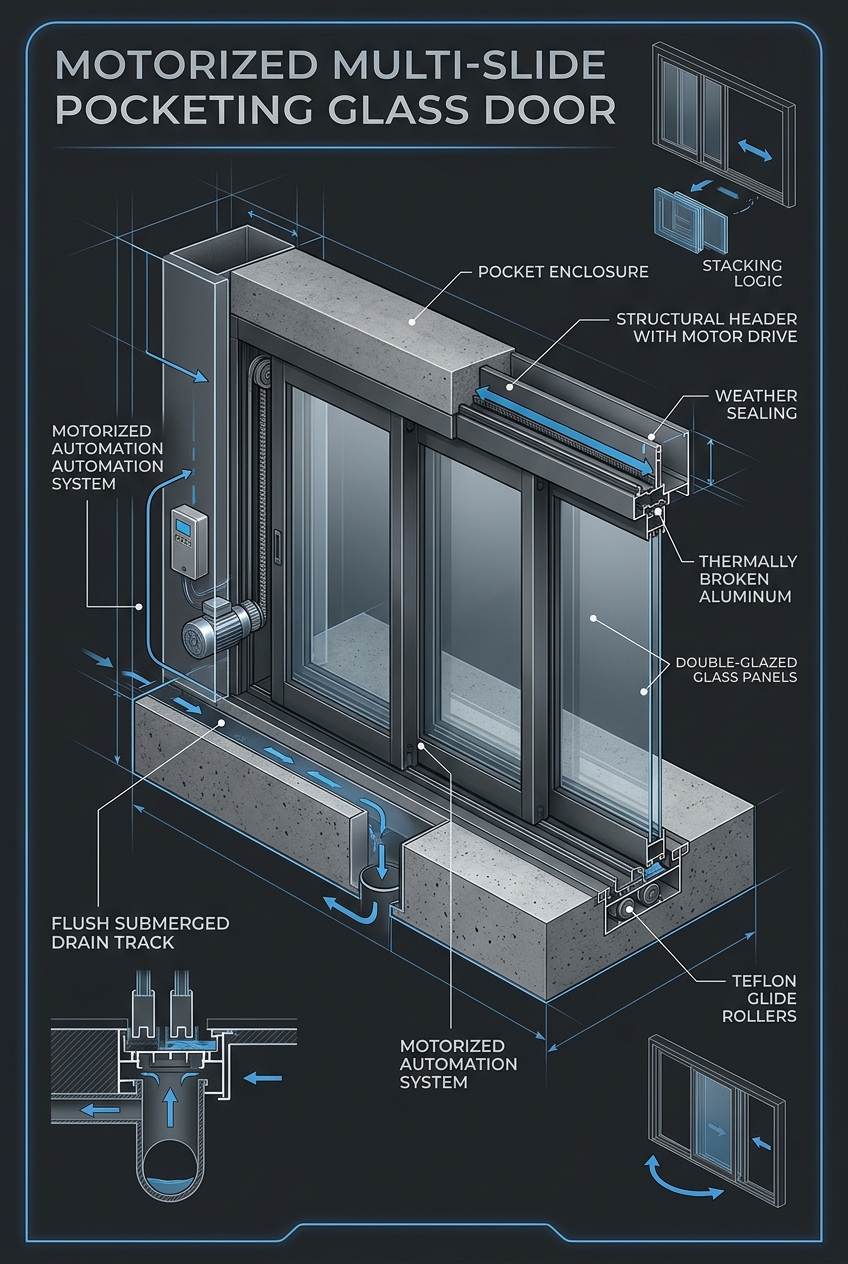
🔍 Click schematic to enlarge full-resolution blueprint
DuPont™ Tyvek® CommercialWrap® Non-Woven Polyolefin
330 minutes water holdout with air infiltration < 0.001 cfm/ft² for continuous envelope protection.
Fluid-Applied Liquid STPE Sill Pan Flashing
Monolithic, seamless corner-to-corner moisture barrier protecting rough openings and subfloors.
50+ Perm Vapor Breathability
Permits internal wall cavity humidity to evaporate outward, preventing wood rot and mold.
DOWSIL™ 795 Structural Silicone Perimeter Glazing Seals
±50% joint movement capability delivering hurricane-rated watertight perimeter sealing.
150-Day UV Exposure Jobsite Durability
Engineered for extended South Florida sun exposure without loss of tear strength or water resistance.